
Reference architecture is only useful if someone can find it
I have reviewed a lot of reference architecture documentation over the years. Some of it is genuinely excellent: well-reasoned, clearly structured, grounded in real constraints rather than vendor ideals. And almost none of it is having the impact it should, because the people who need it most cannot find it when they need it.
A reference architecture document that lives in a SharePoint folder nobody visits is not an architecture asset. It is a monument to good intentions. The value of reference architecture is determined entirely by how easily it can be found and used at the moment an architectural decision is being made.
The discovery problem is the real problem
Most organisations that have invested in reference architecture have a discoverability problem, not an architecture problem. The documentation exists. The patterns are sound. But the developer making a technology choice on a Tuesday afternoon does not know the documentation exists, cannot find it if they look, and does not have the context to understand why the pattern matters even if they stumble across it.
The result is that reference architecture is consulted by architects, who already know it, and ignored by the engineers and project teams who most need to be influenced by it.
Three things that make reference architecture usable
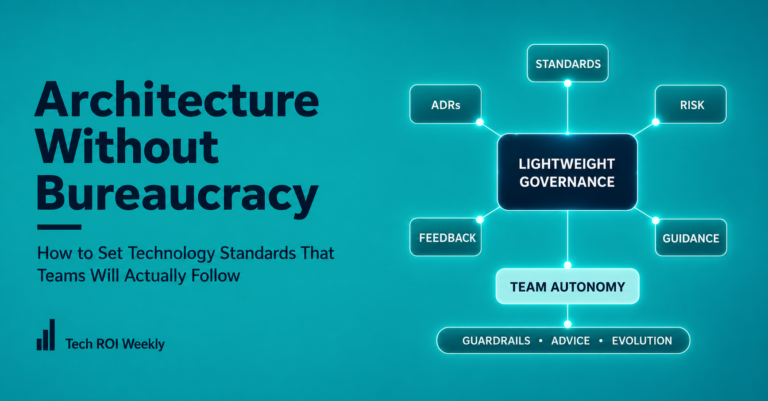
Embed it at the decision point. The highest-value place for architecture guidance is immediately adjacent to the decision it is trying to influence. This might mean architecture review checklists embedded in your project governance process. It might mean patterns documented in your developer portal alongside the tooling they apply to. It might mean ADR (Architecture Decision Record) templates that reference the relevant patterns automatically. The format matters less than the proximity to the moment of decision.
Maintain it at the level of abstraction that stays relevant. Reference architecture that describes specific product versions or vendor configurations becomes stale fast. Architecture that describes the structural principles and the reasoning behind them stays relevant much longer. Document the why, not just the what. The why will keep the what honest.
Make non-compliance visible, not just non-compliant. If your architecture governance process treats deviation from reference architecture as a failure, people will hide deviations rather than discuss them. A better model is one where deviations are documented, reasoned, and reviewed, so that genuine exceptions inform the evolution of the reference architecture rather than creating invisible technical debt.
The question worth asking
When did someone last use your reference architecture to make a decision? If you cannot point to a recent example, the architecture exists. It is not functioning as an asset.
Further reading
- Headless AEM is an architecture decision, not a feature toggle
- The hardest part of legacy modernisation is rarely the technology
- Your operating model is the thing actually blocking your roadmap
- Enterprise architecture (Wikipedia)
Free framework
The Step-by-Step Framework That Reduces Tech Project Risk by 40-60%: Before You Write a Line of Code
Four phases, Discovery, Validation, Architecture, and Sequencing, so you stop building the right solution in the wrong order.
Download the De-Risking Framework: free