
The platform team model is not right for every organisation
Team Topologies popularised the platform team model as a solution to the coordination problems that emerge in large technology organisations. The model is genuinely useful in the right context. It is not a universal prescription, and applying it to organisations where the preconditions do not exist produces a reorganisation that creates new coordination overhead without resolving the original problem.
What the platform team model requires
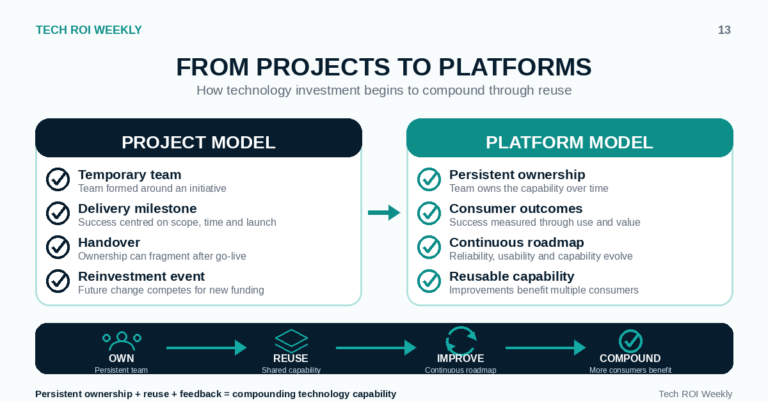
A platform team works when there is a genuine internal platform: a set of capabilities that multiple stream-aligned teams depend on, that needs continuous investment and evolution, and where the coordination cost of each team building and maintaining its own version of those capabilities exceeds the cost of a shared platform. Without a genuine platform need, the platform team model creates a service organisation that stream-aligned teams route around.
The model also requires a product management capability in the platform team: someone who treats internal teams as customers, maintains a roadmap, and manages the tension between platform evolution and consumer stability. Platform teams without product management become infrastructure teams that maintain what they have built but stop evolving it in response to consumer needs.
Where the model is misapplied
The most common misapplication is reorganising infrastructure and operations teams into platform teams without changing the funding model, the accountability structure, or the capability of those teams. The label changes. The behaviour does not. A traditional IT operations team that is renamed a platform team does not become a product-oriented platform team without significant investment in capability.
The second common misapplication is creating platform teams for capabilities that are not genuinely shared across multiple stream-aligned teams. A platform team serving one or two internal consumers will not generate enough value to justify the coordination overhead.
The size threshold
Platform teams make most sense at a technology organisation size where the duplication cost across stream-aligned teams is real and visible. Below approximately five to seven stream-aligned teams, the coordination overhead of platform team interactions often exceeds the benefit. Above that threshold, the case for genuine platform investment strengthens considerably.
Below that threshold, strong engineering standards, shared libraries, and internal communities of practice typically deliver more value than a dedicated platform team.